.. .- -. -.-. ....
In a world dominated by instant messaging, high-speed fiber optics, and voice assistants, the idea of sending messages using short and long beeps might seem like a relic of the past. However, Morse Code remains one of the most resilient and versatile communication methods ever devised. It is not merely a historical curiosity; it is a foundational system that teaches us about the power of simplicity in information transfer.
This article explores the enduring legacy of this dot-and-dash language, examining its mechanics, its modern applications, and why it continues to hold value for creators, professionals, and enthusiasts alike.
The Essence of Simplicity: How It Works
At its core, Morse Code is a method of encoding text characters as standardized sequences of two different signal durations, called dots and dashes (or dits and dahs). The system was developed in the 1830s and 1840s by Samuel Morse and Alfred Vail for use with the electric telegraph. What makes this approach so brilliant is its efficiency. By assigning shorter codes to more frequently used letters, such as 'E' (.) or 'T' (-), the system allows for rapid transmission of common words.
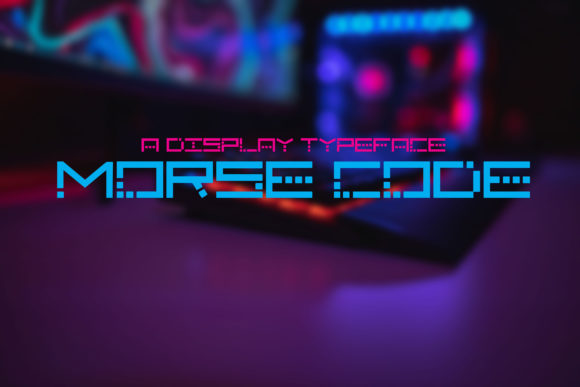
The beauty of this pixel-style logic lies in its binary nature. Just as modern computers rely on zeros and ones, early telegraphy relied on the presence or absence of an electrical current. A short burst represents a dot, while a longer burst represents a dash. Between characters, there is a brief pause, and between words, a longer silence. This rhythm creates a distinct cadence that can be heard, seen, or felt.
- Dots (Dits): Short signals, lasting one unit of time.
- Dashes (Dahs): Long signals, lasting three units of time.
- Spacing: Critical for distinguishing between letters and words.
Understanding these basic building blocks reveals why the system is so robust. Even if part of a message is lost due to interference, the human brain can often reconstruct the intended word based on the remaining context and rhythm.
Beyond Telegraphs: Modern Applications
While the telegraph stations of the 19th century have largely vanished, the utility of Morse Code has found new life in unexpected places. Its ability to transmit information over long distances with minimal equipment makes it invaluable in specific scenarios where other technologies fail.
Aviation and Maritime Safety
Perhaps the most critical modern use of Morse Code is in aviation and maritime navigation. Many airports and ships still utilize Air Navigation Aids (NDB) and radio beacons that broadcast their identification code in Morse. Pilots and sailors listen to these unique rhythmic signatures to confirm they are tuned to the correct frequency. In emergency situations where digital screens fail or GPS is unavailable, a simple radio beacon can guide a vessel to safety.
Amateur Radio and Emergency Comms
For amateur radio operators, known as "hams," proficiency in Morse is often a badge of skill. During natural disasters when cellular networks and internet infrastructure collapse, Morse Code remains operational. It requires significantly less bandwidth than voice or data transmission, meaning a small battery-powered transmitter can reach much further than a standard smartphone. This capability has saved lives in remote areas where traditional communication lines are severed.
Creative Expression and Design
In the realm of design and art, Morse Code offers a unique aesthetic. As mentioned in our introduction, the visual representation of dots and dashes fits perfectly into pixel-style fonts. Designers use these patterns to create logos, tattoos, and digital art that convey hidden meanings. A message written in this style looks stylish and mysterious, adding a layer of depth to visual storytelling. It bridges the gap between the digital pixel and the analog signal.
Who Benefits from Learning This Language?
You do not need to be a sailor or a pilot to appreciate the benefits of learning Morse Code. The process of mastering it offers cognitive advantages that extend beyond simple communication.
- Cognitive Development: Learning to send and receive messages by ear improves auditory processing and memory retention. It forces the brain to recognize patterns quickly, enhancing focus and concentration.
- Accessibility: For individuals who cannot speak or type, Morse Code provides an alternative interface. It can be adapted for eye-gaze systems or simple switches, allowing for independent communication.
- Historical Appreciation: Understanding the code provides a deeper connection to history. It opens the door to understanding the stories of the Titanic, the World Wars, and the evolution of global connectivity.
Furthermore, for business owners and creators, incorporating Morse Code into branding can be a powerful marketing tool. A logo that hides a secret message in dots and dashes invites engagement. Customers love decoding puzzles, and this interactive element can make a brand memorable and distinctive.
Evaluating Suitability: Strengths and Limitations
Before deciding to integrate Morse Code into a project or personal routine, it is essential to weigh its strengths against its limitations. Like any tool, it excels in specific contexts but may not be the best choice for others.
Strengths
The primary advantage is reliability. Morse Code works in environments with high noise levels where voice communication would be unintelligible. It also requires minimal power and hardware. You can send a message with a flashlight, a whistle, or a simple wire. This makes it incredibly versatile for outdoor activities, survival situations, or low-tech environments.
Considerations and Limitations
The main drawback is speed. While skilled operators can send hundreds of words per minute, the average person learns at a much slower pace. For real-time, complex conversations, voice or text chat is far superior. Additionally, Morse Code is not universally understood today. If you send a message in this format, the recipient must know how to decode it, which limits its broad applicability in general business correspondence.
There is also a learning curve. Unlike typing, which relies on muscle memory for keys, Morse requires mental mapping of rhythms. It demands practice to achieve fluency. However, many find the journey rewarding because it changes the way they perceive sound and time.
Practical Scenarios and Real-World Examples
To better understand the practicality of this system, let's look at a few real-world scenarios where Morse Code shines.
Imagine a hiker in a dense forest where cell service is non-existent. They spot a rescue plane overhead. Instead of waving frantically, they use a mirror to flash sunlight in a Morse pattern. The pilot recognizes the rhythm, understands the distress signal, and initiates a rescue. This scenario highlights the universality of the code—it transcends language barriers and relies only on light and timing.
In the digital age, consider a website developer creating a portfolio. They might embed a hidden Morse Code sequence in the footer of their site. When visitors hover over a specific icon, a sound plays, or a tooltip appears explaining the message. This adds an element of surprise and demonstrates technical creativity without cluttering the user interface.
Another example is in the gaming industry. Many puzzle games incorporate Morse Code as a mechanic. Players must decode messages to unlock doors or find treasure. This gamifies the learning process, making education fun and engaging for younger audiences.
Conclusion: A Timeless Connection
Morse Code is more than just a series of dots and dashes; it is a testament to human ingenuity. It reminds us that effective communication does not always require complexity. Sometimes, the simplest signals carry the most weight. Whether you are a professional looking to add a unique flair to your design projects, a creator seeking to engage your audience, or simply someone interested in the history of technology, Morse Code offers endless possibilities.
By embracing this classic system, we connect with the past while equipping ourselves with a tool that could prove vital in the future. Its integration into modern design, particularly with stylish pixel fonts, ensures that the spirit of the telegraph lives on in the digital landscape. So, the next time you see a sequence of dots and dashes, remember that behind them lies a rich history of innovation, resilience, and the unbreakable desire to connect.
Ready to try it yourself? Start by memorizing the alphabet, then practice sending simple messages. You might find that this ancient language holds the key to a new kind of creativity.